The pattern of Parang is diagonal lines in the angle position that across with straight lines (vertical) so that create an ornament like knife blade that separated by a half cut of ketupat (rice cube wrapped with coconut leaves shaped into quadrilateral) is called mlinjon (mlinjo is derived from a tree or fruit of Gnetum gnemon). Parang without mlinjon is the pattern of lereng.The meaning of parang as a knife or sword has been argued among the anthropologist.
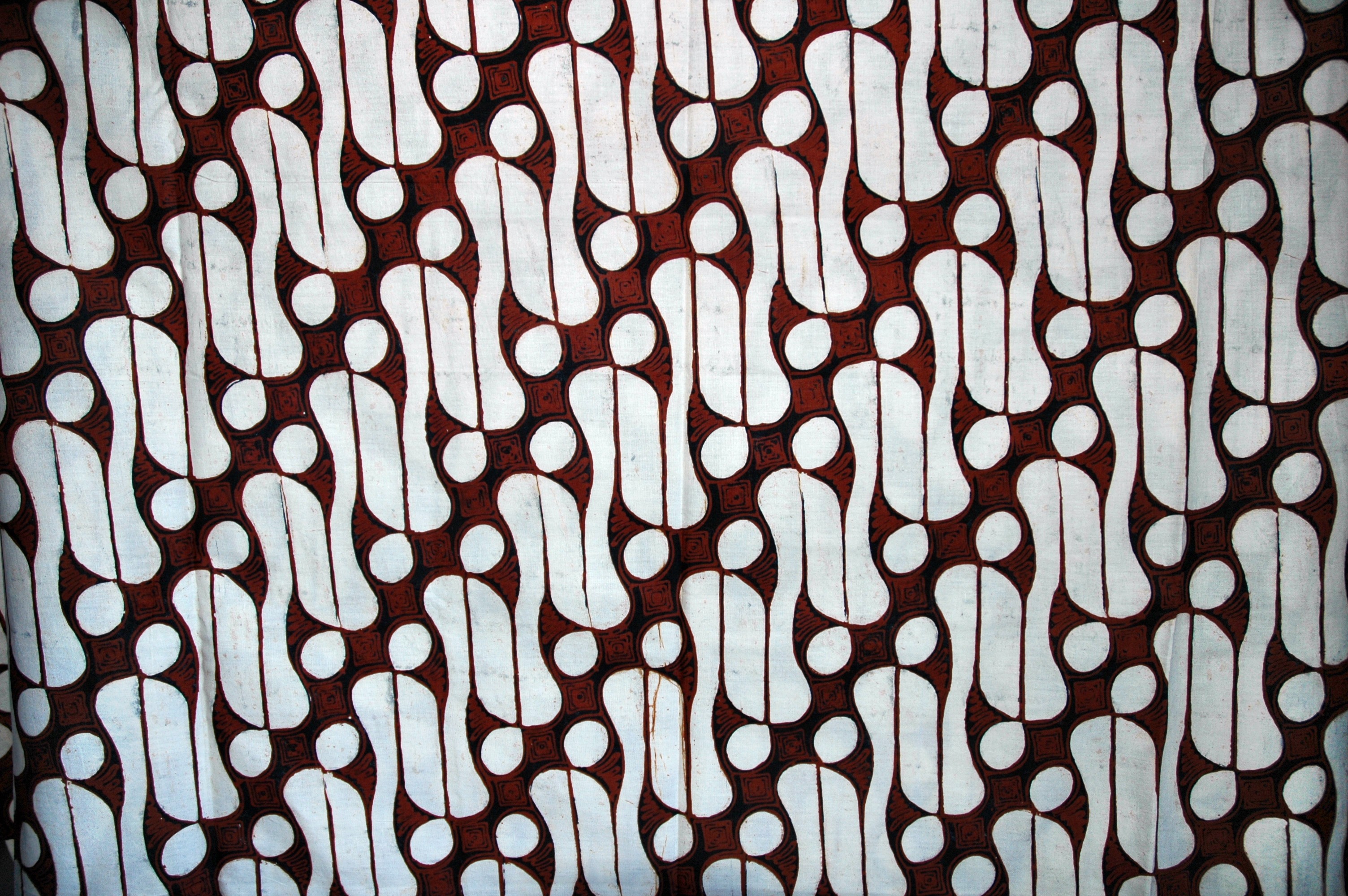
One of the patterns were reserved exclusively for royal attire It is 'Parang Rusak'
The famous design of parang is Parang Rusak. There is an argument about the ages and history. Many people did the research in until the period of Raden Panji (11th century), a hero from the Kingdom of Kediri and Jenggala, East Java. Others related the history of Parang Rusak with the legend of Sultan Agung from the Kingdom of Mataram (1613-1645) as the creator. They believe that Sultan Agung did the meditation in the South Coast of Java, gazed the big waves hit the rock wildly . In Javanese, Parang ís karang (rock), so Parang Rusak also means ‘broken rock.

